WEEK 1
Chosen set: ten consecutive books on any CSM library shelf
shelf 746: textiles
Book titles+ summary:
- Printed textile design; Marie Christine Nöel and Michaël Cailloux
Authored by experts Marie-Christine Noel and Michael Cailloux, both seasoned teachers at the prestigious Françoise Conte school in Paris, this hardcover book explores the techniques for creating textile motifs, understanding trends, and applying them within the fashion and home industries.
- The geometrics Volume 1; McMullan Neuberg
The Geometrics: Volume 1 is a book by Daisy McMullan and Emma Neuberg that serves as the first in an anthology of geometric textiles. It features 15 artists who specialize in geometric pattern and form, with each artist having pages of images and text describing their work and inspiration. The book’s themes include sustainable development for materials, timeless aesthetics, and a narrative of geometrics in art and design beyond fashion.
- Naturally ‘70s Fabric; Constance Korosec and Leslie Pina
The fibers of the 1970s were made of materials in two general groups: the naturals and the synthetics. This book concentrates on the natural materials and presents a visual sampling of silk, cotton, flax, and wool.
- Stitched textiles: landscapes; Kathleen Matthews
This book is part of the new Stitched Textiles series for textile artists (in particular intermediate to experienced embroiderers, quilters, etc.), showing how to embellish and enhance fabric surfaces with paints, dye, applique, collaged elements, stitching, beads and more.
- River & cloth, celebrating the textile heritage of Merton
River & cloth: celebrating the textile heritage of Merton is a 2010 book by Clare Moloney that summarizes a heritage project and exhibition of the same name. The book documents the rich textile history of the Merton area in south London, highlighting the significance of the River Wandle and the renowned workshops of William Morris and Liberty & Co. at Merton Abbey Mills
- Contemporary textiles, the fabric of fine art
Contemporary Textiles: The Fabric of Fine Art” is a book that examines the evolution of textile art from traditional craft to contemporary fine art, featuring over 60 groundbreaking artists. It showcases the medium’s increasing presence in the art world through a wide range of works, from embroidery to large-scale installations, exploring how textiles can be used to address topics like identity, history, politics, and labor. The book highlights the innovative and often overlooked artistic and conceptual significance of textile-based work, using examples from artists like El Anatsui and Tanya Aguiñiga.
- Cloth& culture now; Lesley Millar
highlights exciting and innovative contemporary textile practice from areas where there has been a strong tradition of textile linked to specific cultural identity.
- Connecting art to stitch; Sandra Meech
fine-art skills and materials are explored through a structured series of short exercises that are specially designed to increase confidence and unlock creativity.
- Material future, textile future research Centre
a research community at Central Saint Martins focused on exploring how materials and textiles can shape a more sustainable and inheritable future
- A dark, a light, a bright, the designs of Dorothy Liebes; Brown and Griffith Winthon
Essays explore milestones of her career, including her close collaborations with major interior designers and architects to create custom textiles, the innovative and experimental design studio where she explored new and unusual materials, her use of fabrics to enhance interior lighting, and her collaborations
What are the different components?
How are they similar?
- books
- Textile
- Library
- Photographs
- Texts
- index
How are they different?
Different approaches to textile
How are they held together, both formally and conceptually?
- Shape
- materials
experiment 1:
Taxonomizing/ recategorising by words

experiment 2:
recategorising by intuitive order
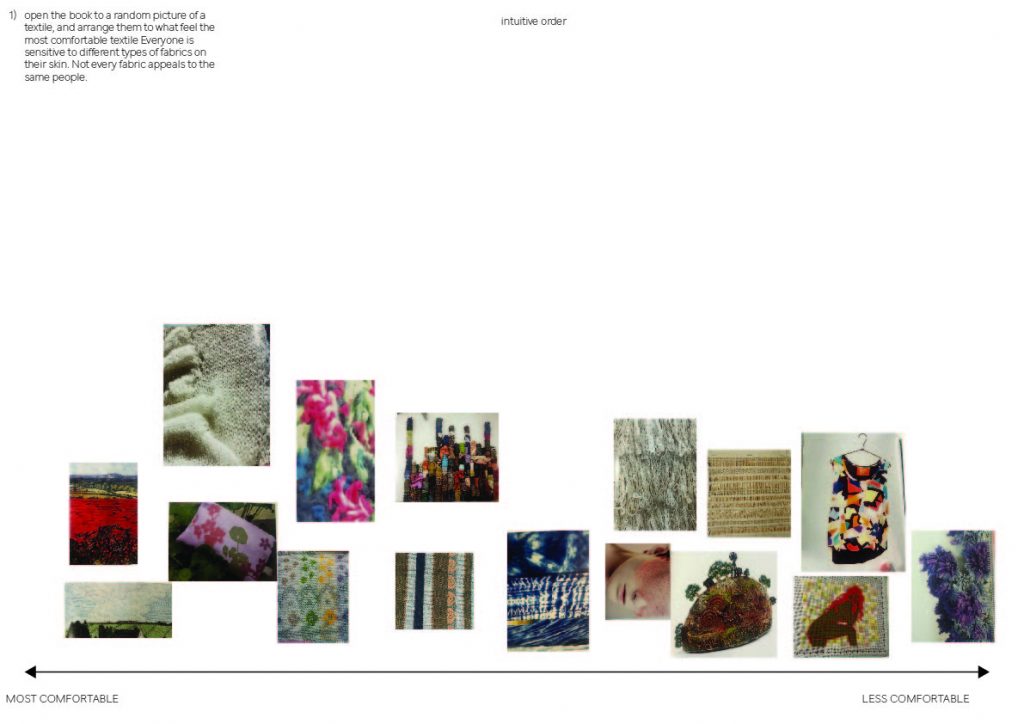
experiment 3
remixing in new paterns
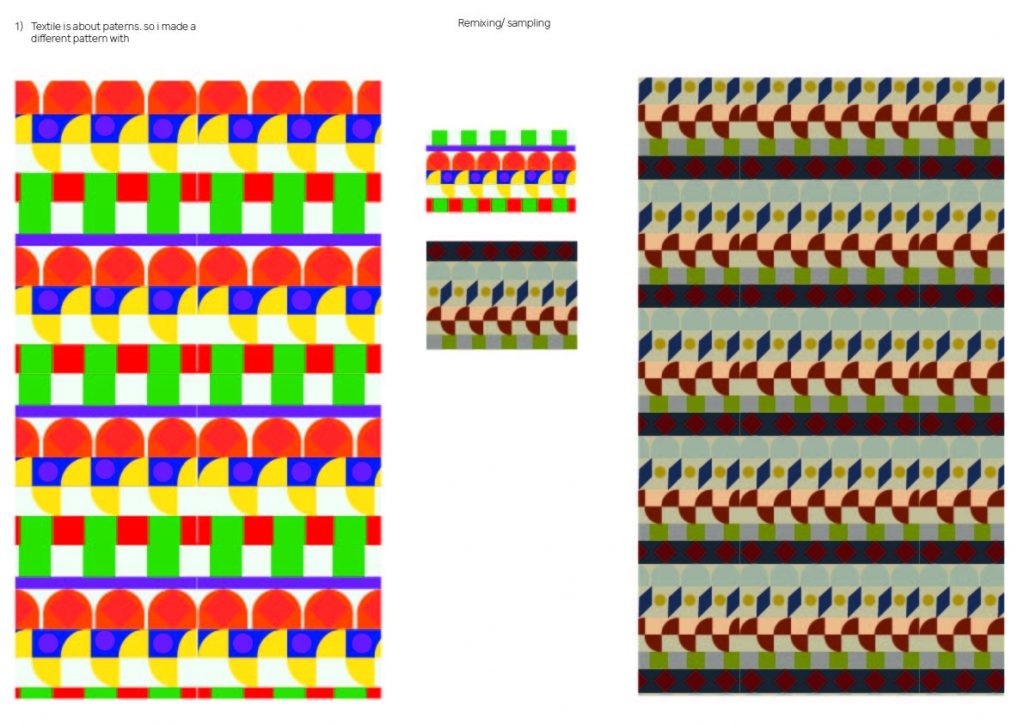
WEEK 2
continuing with the taxonomizing to find new connections
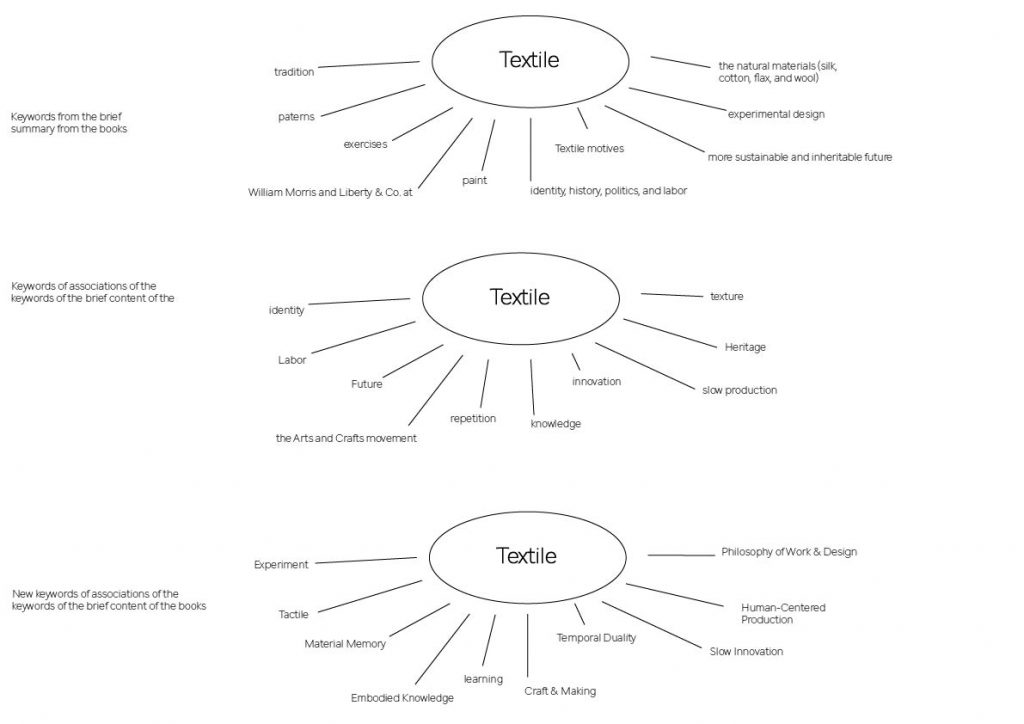
recategorising by different techniques
the common theme from every books was diffent techinques that were being used throughout the books
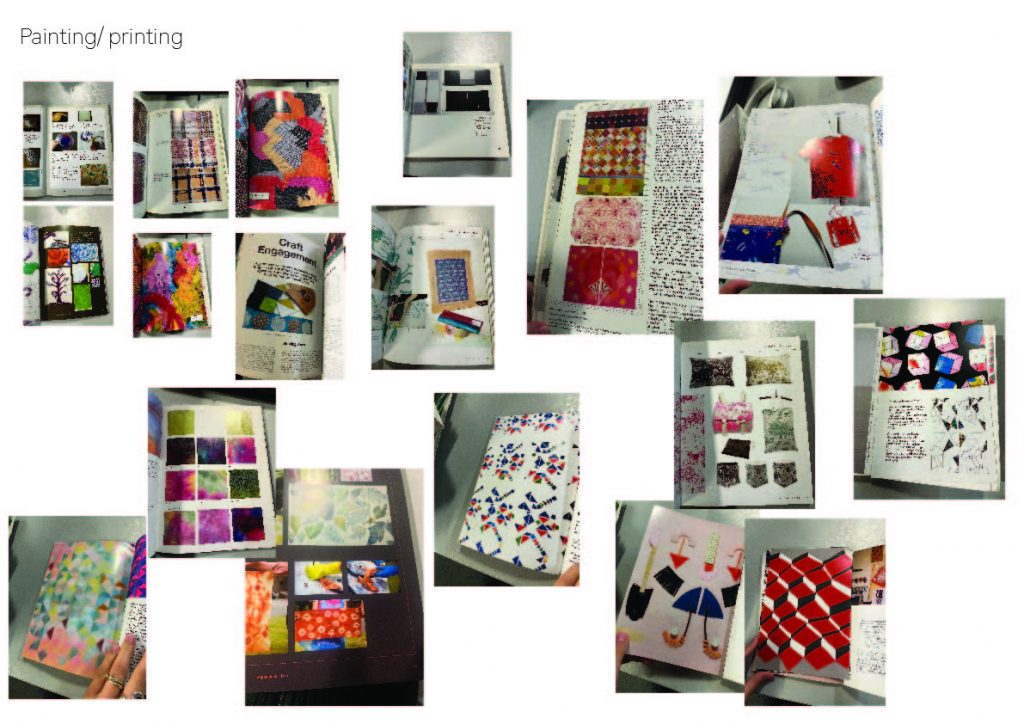
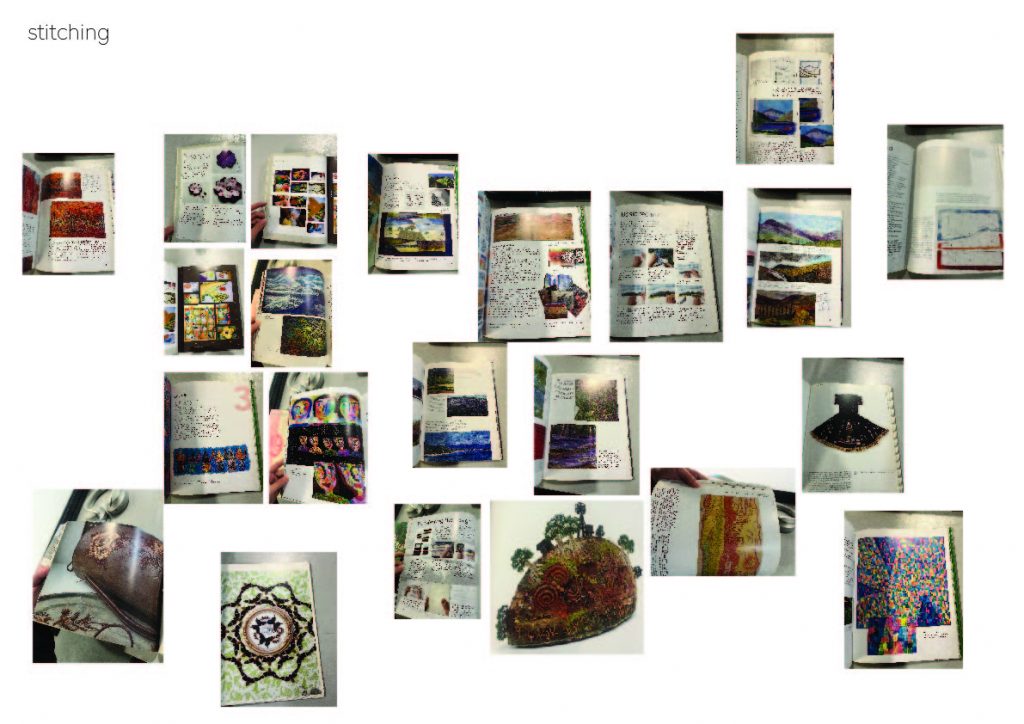
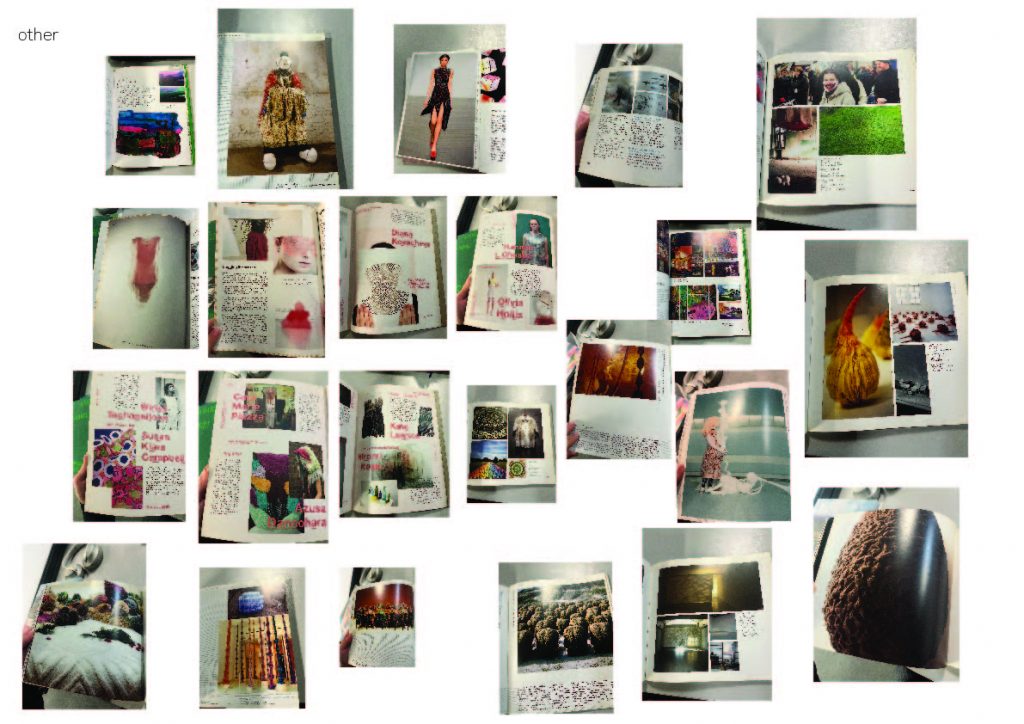
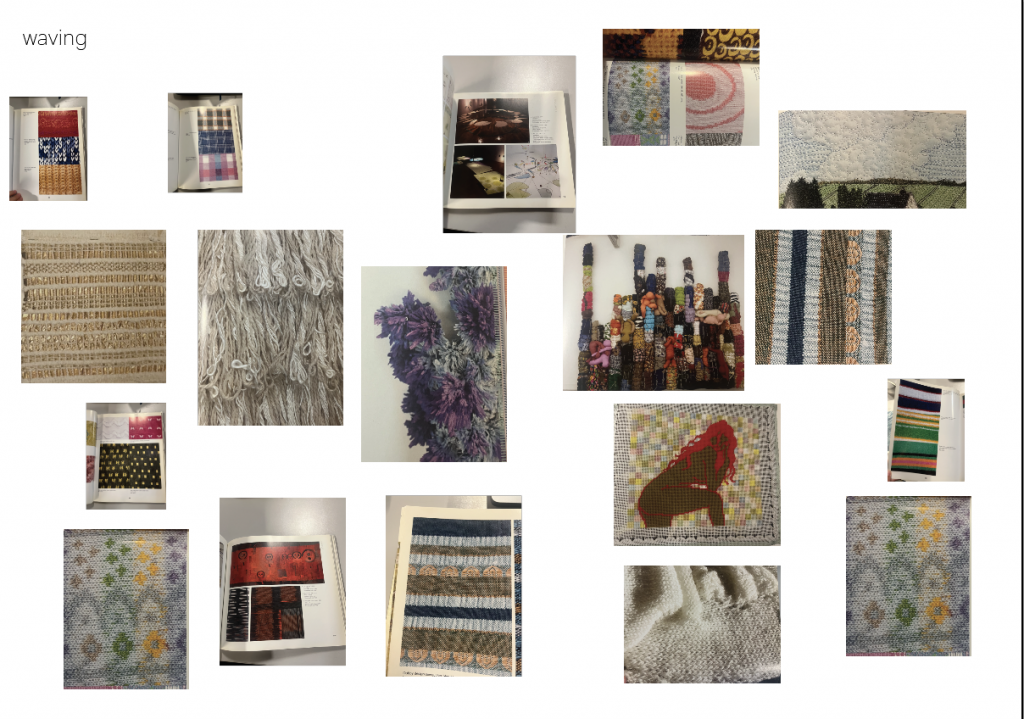
While recategorising the items by technique, questions arose:What happens when you experiment with a particular technique? How does the experience change and how do we view it?
I started by Weaving different patterns, photographs, techniques from the books into graphic compositions
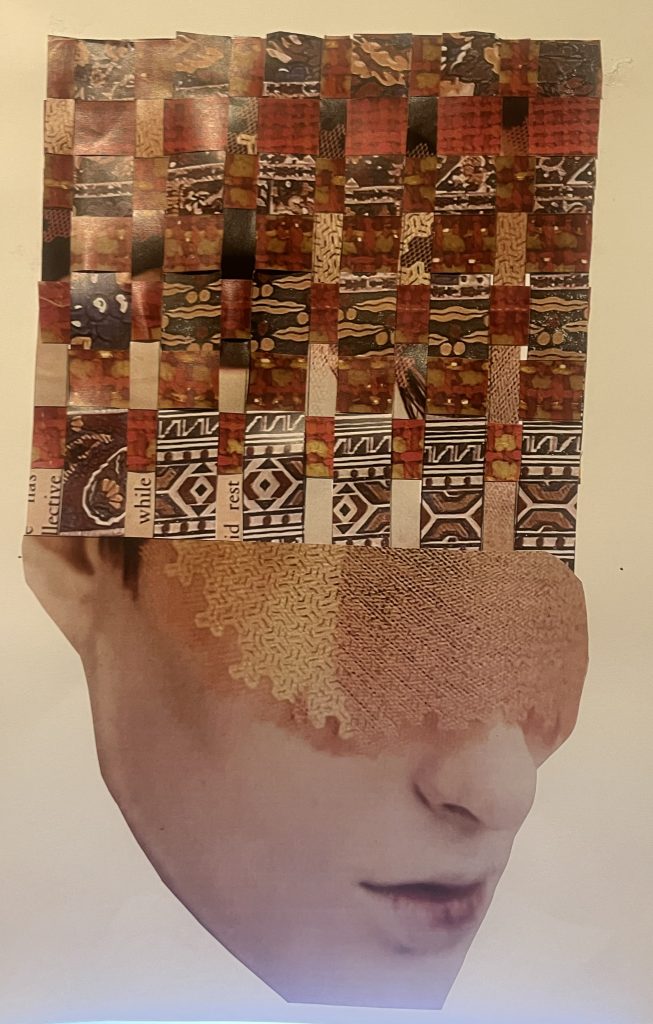
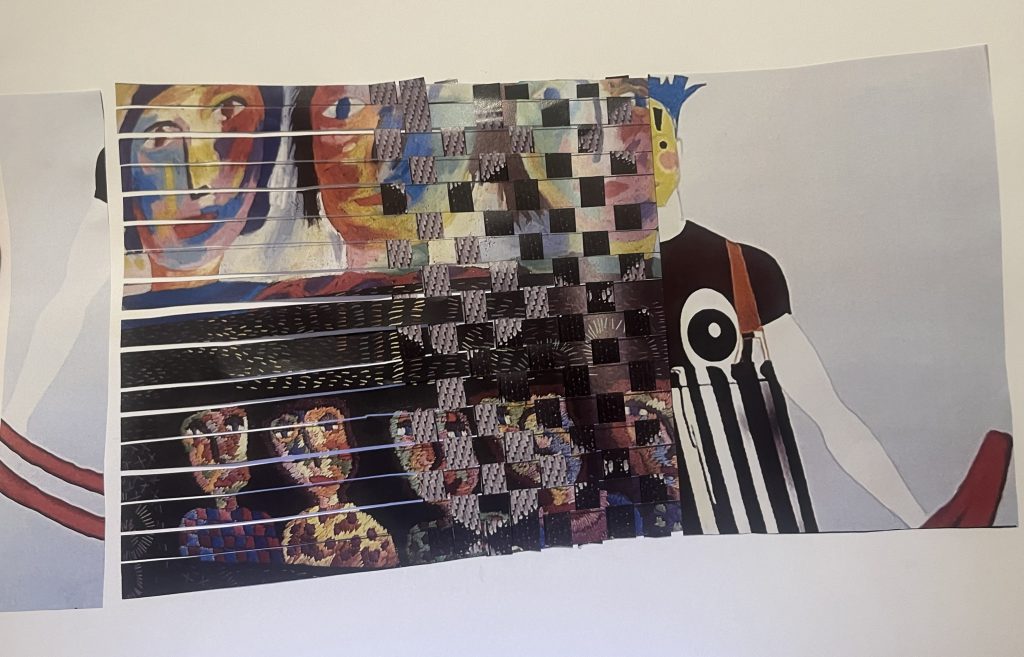
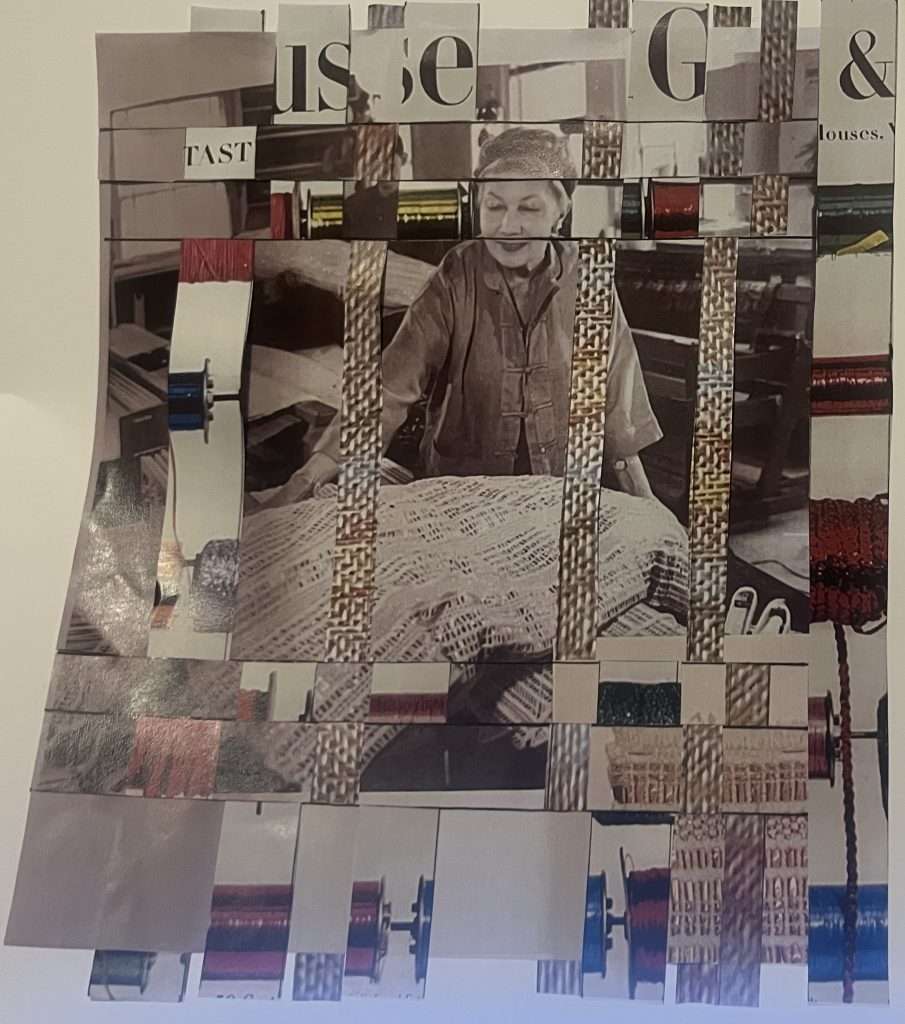
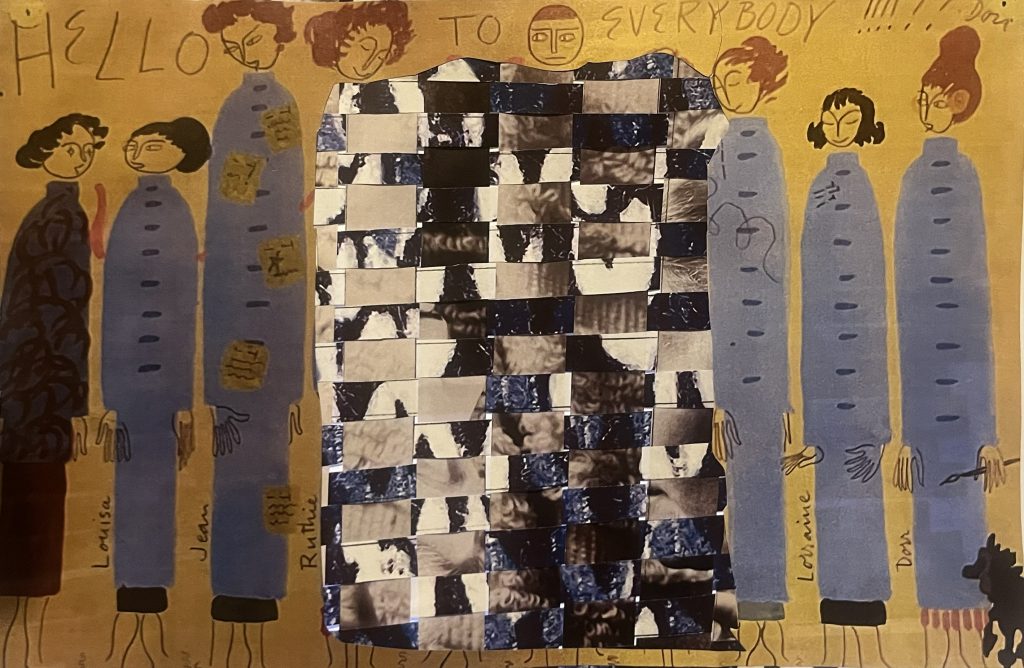
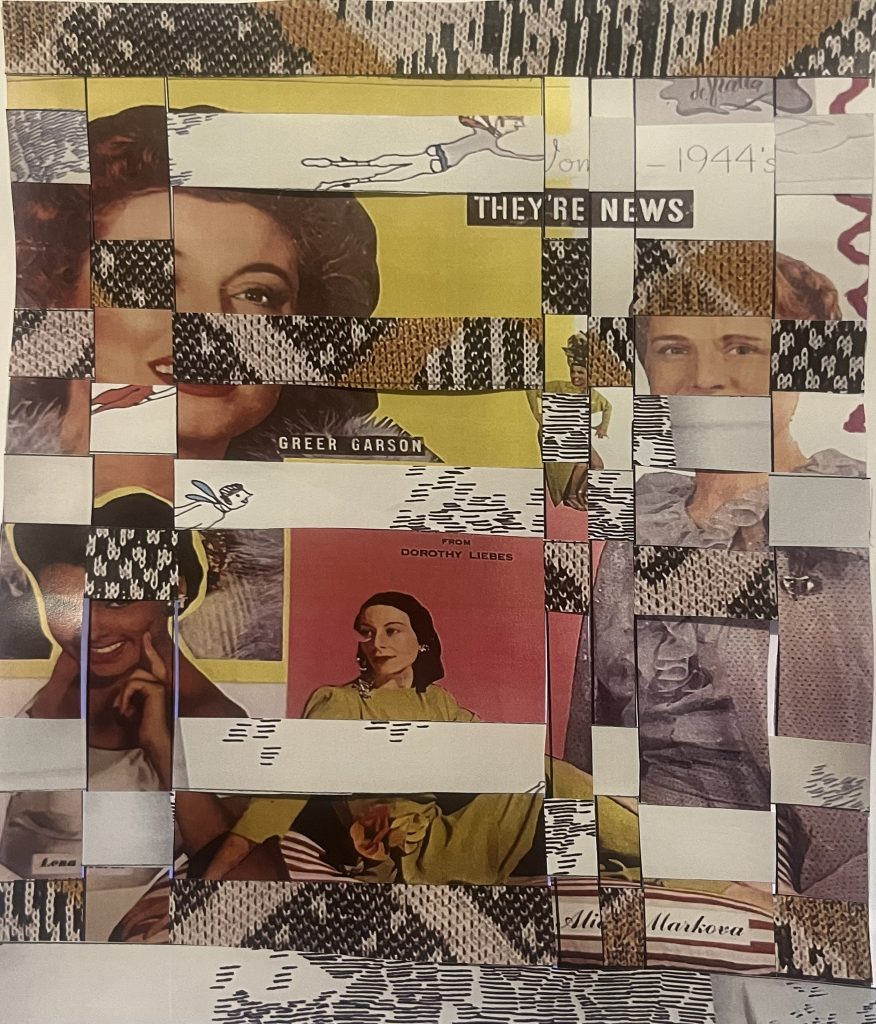
To make a new kind of textile by silk screening them again on fabric
The end result would be a publication made from textile with the collages printed using screen printing.
Leave a Reply