This week I try to make the best iteration with everything I learned.
I used this iteration to find new ways to build the things I already know how to build in blender. I Played around with the tools I and stept I know to think of other ways to make shapes.
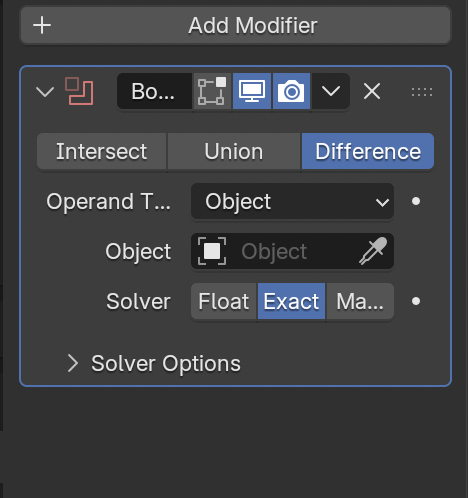
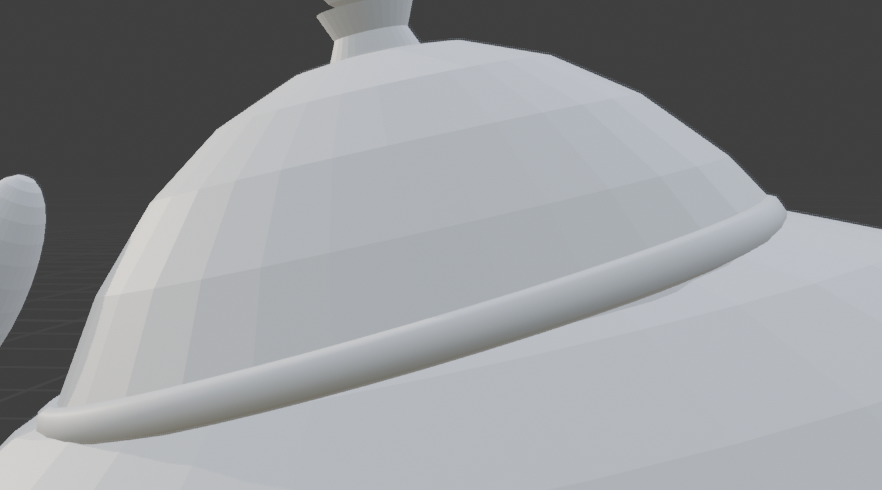
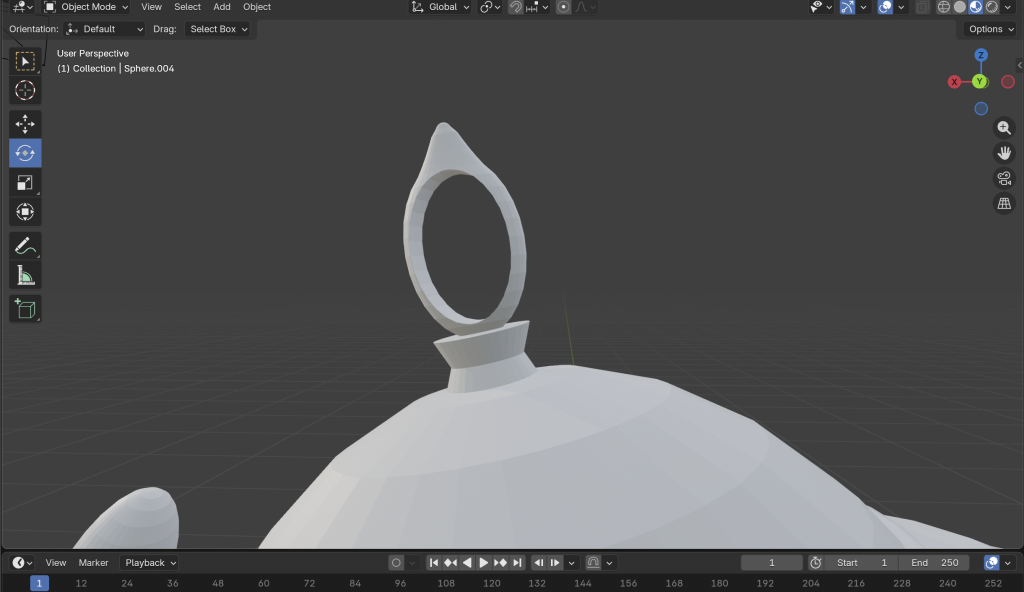
I found a new method to try the embossed mouth of the teapot. but it again came with its difficulties. First I found it but you couldn’t really see it. the second time I tried it I could cut the shapes but it wasn’t looking that organic.
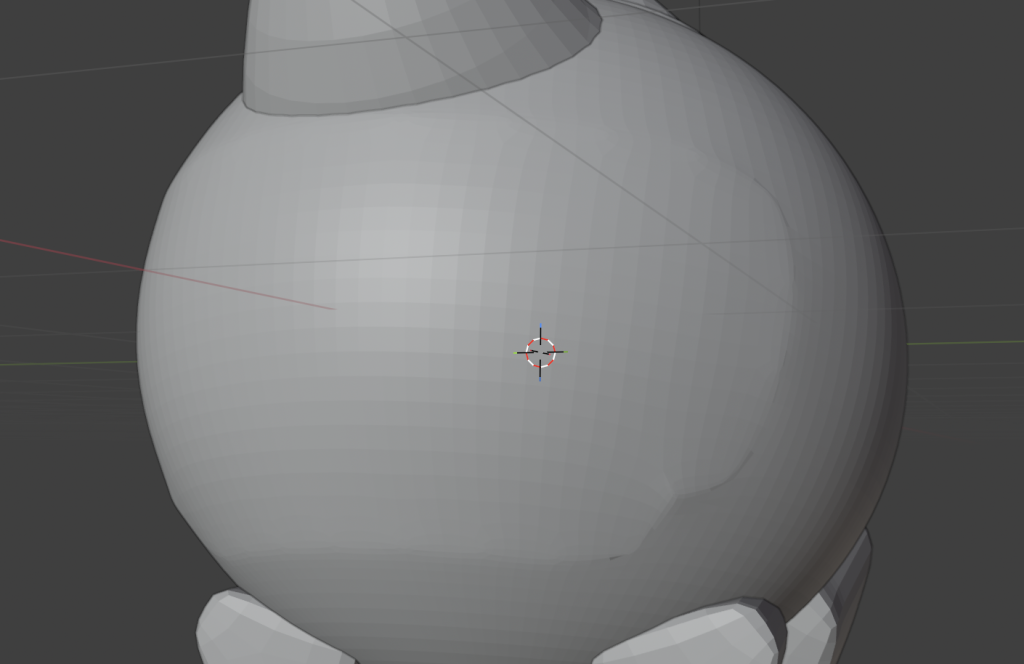
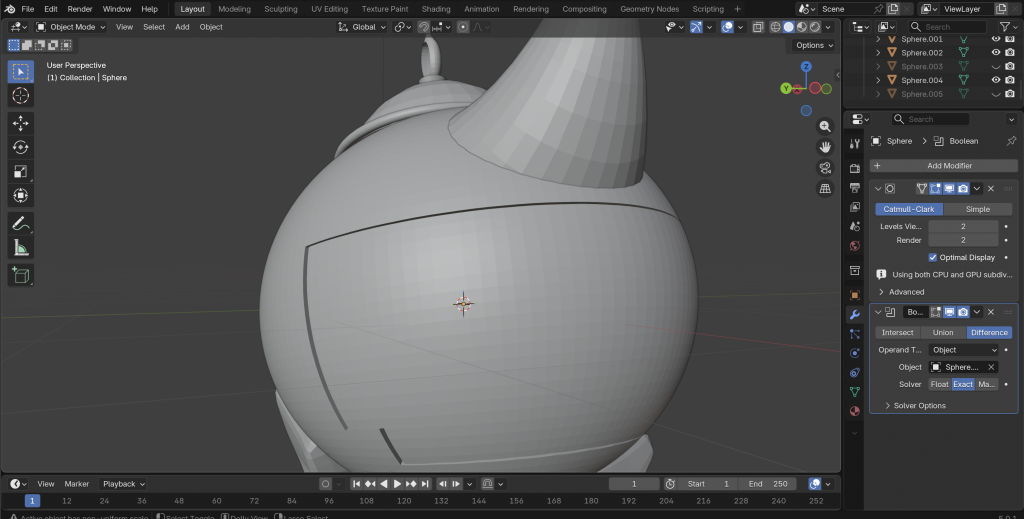
finale iteration in solid viewport
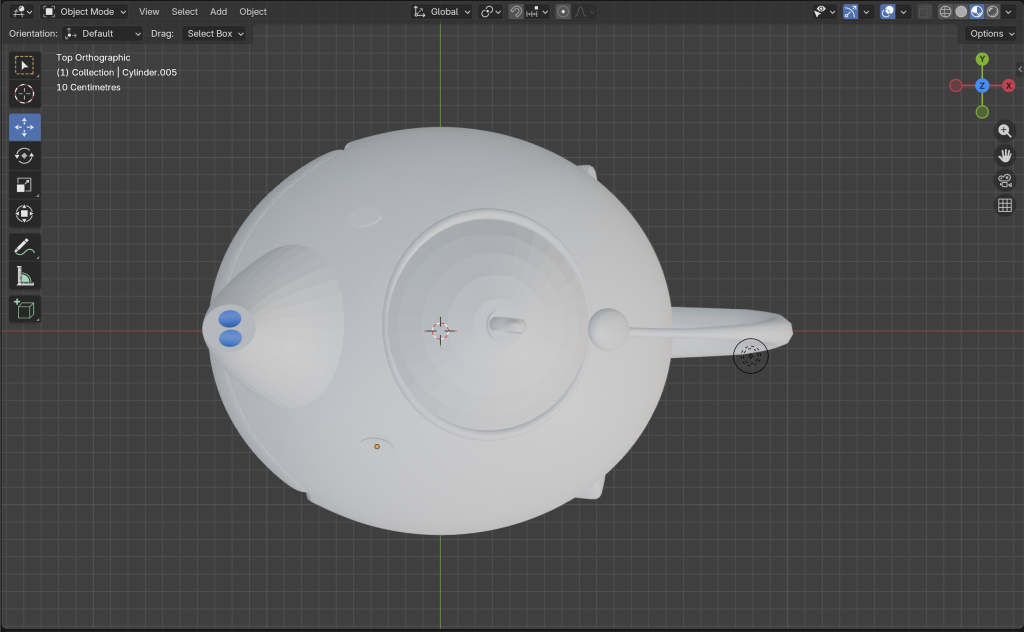
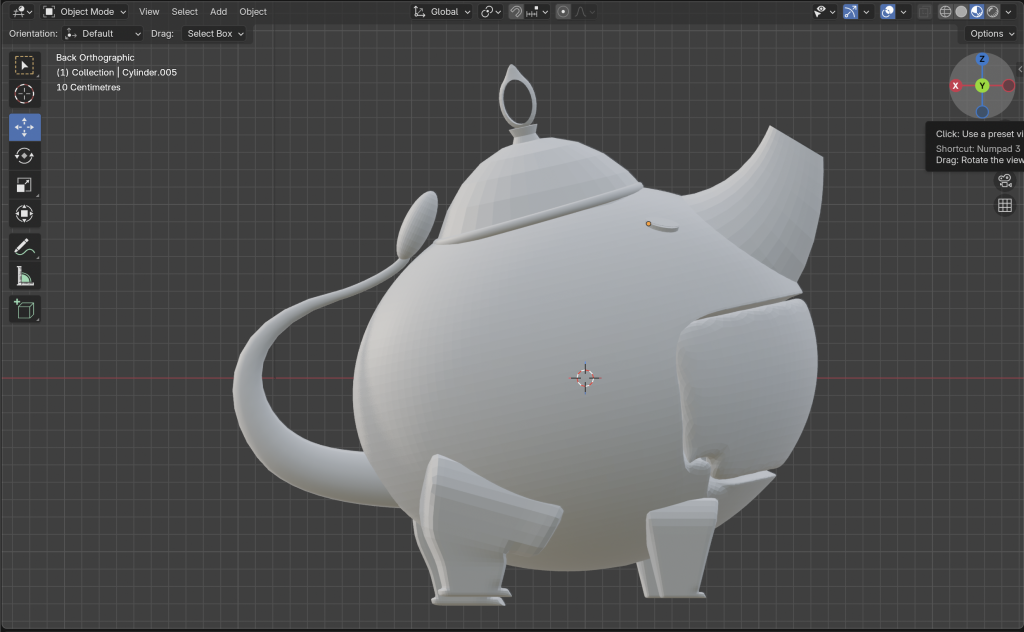
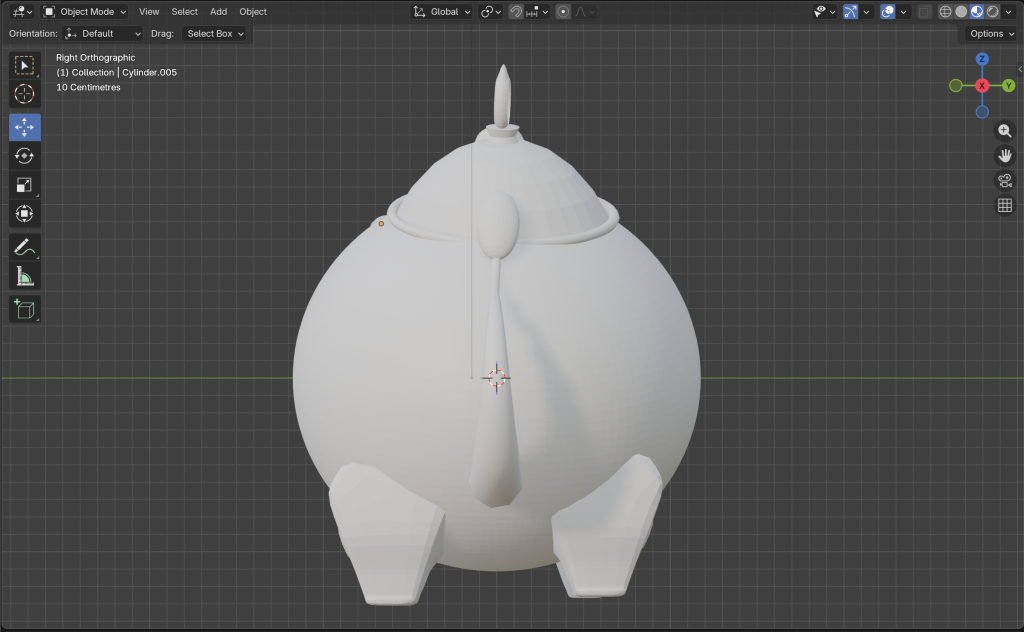
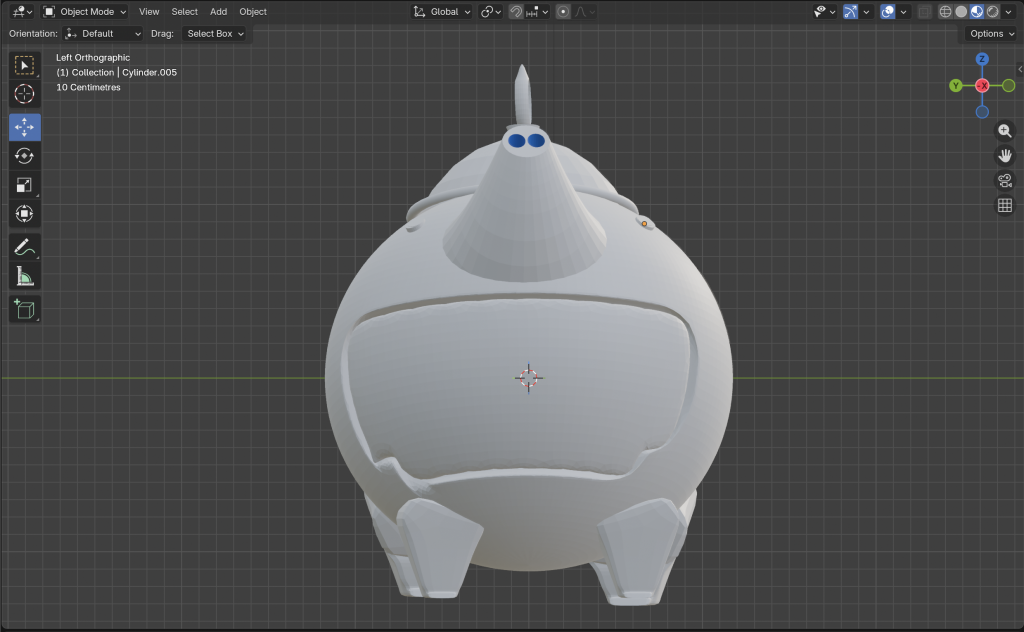
2 Final iterations in rendering viewport
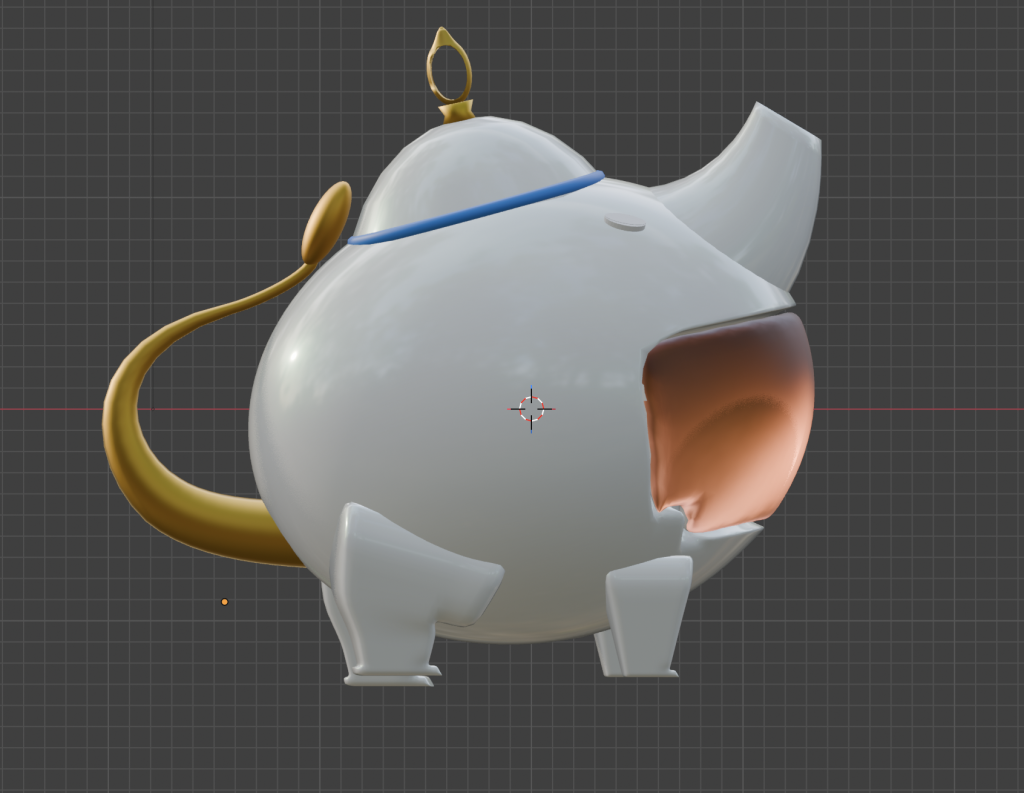
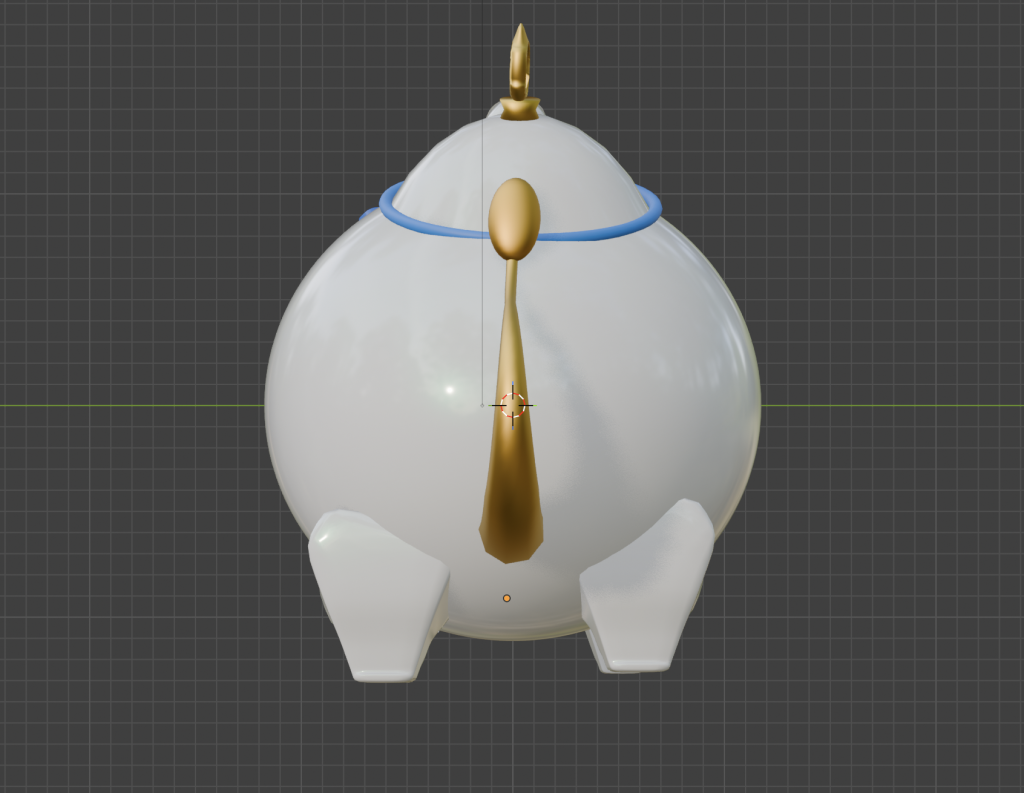
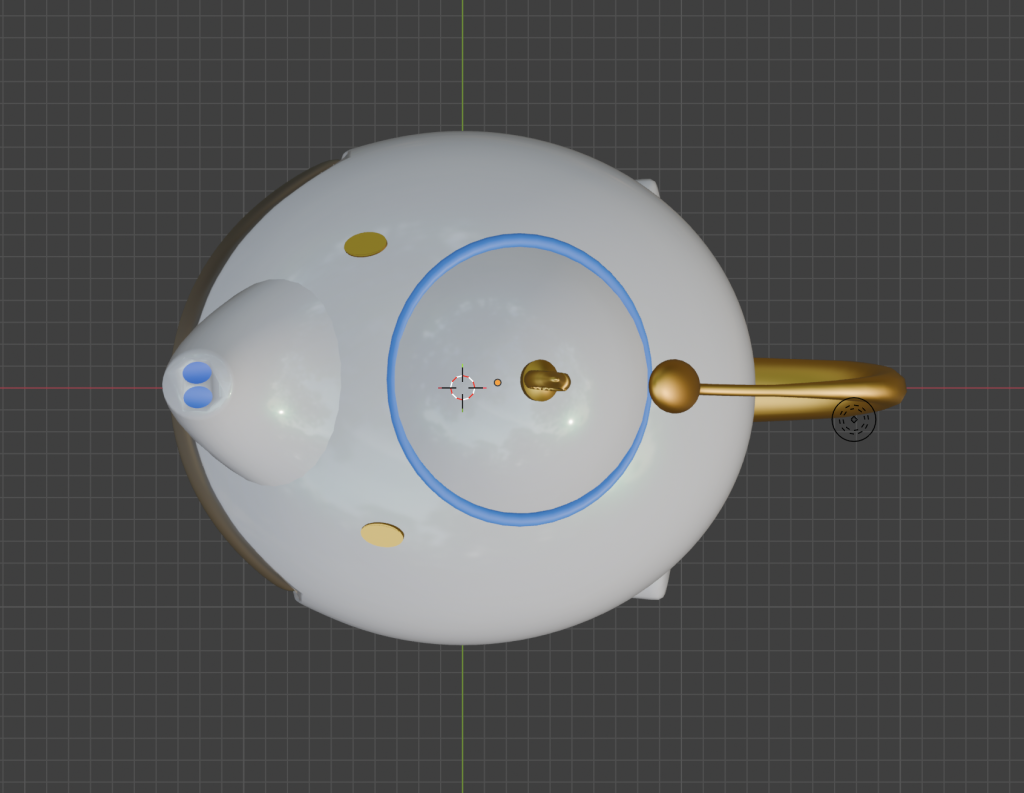
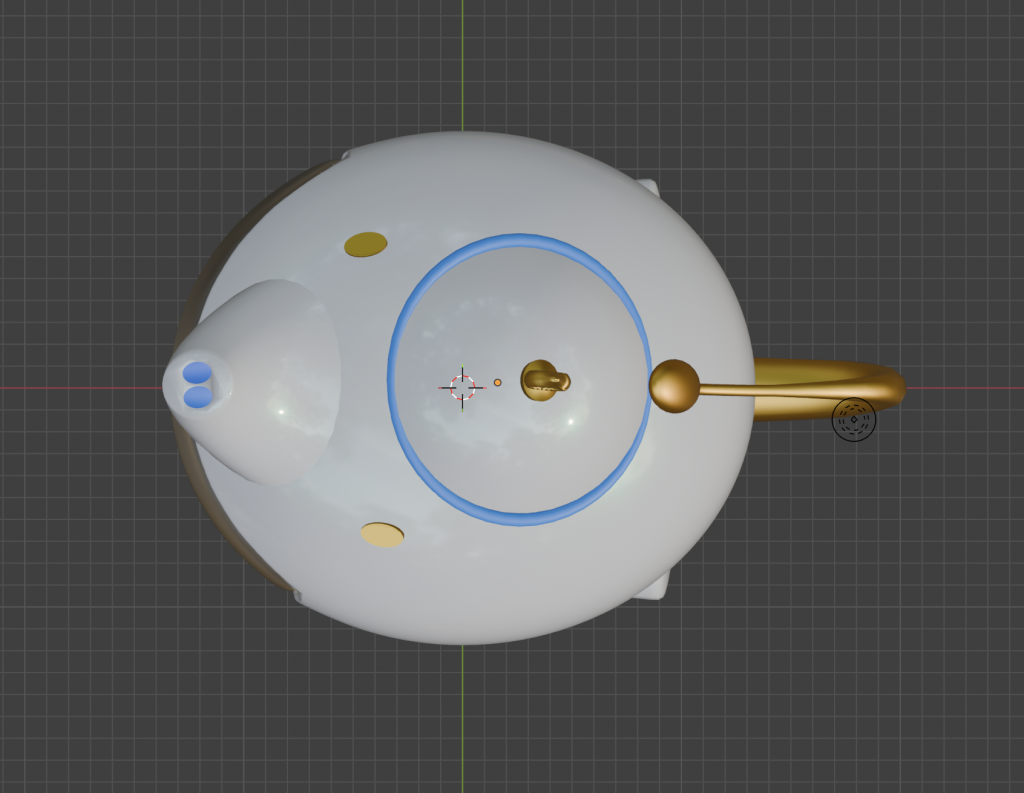
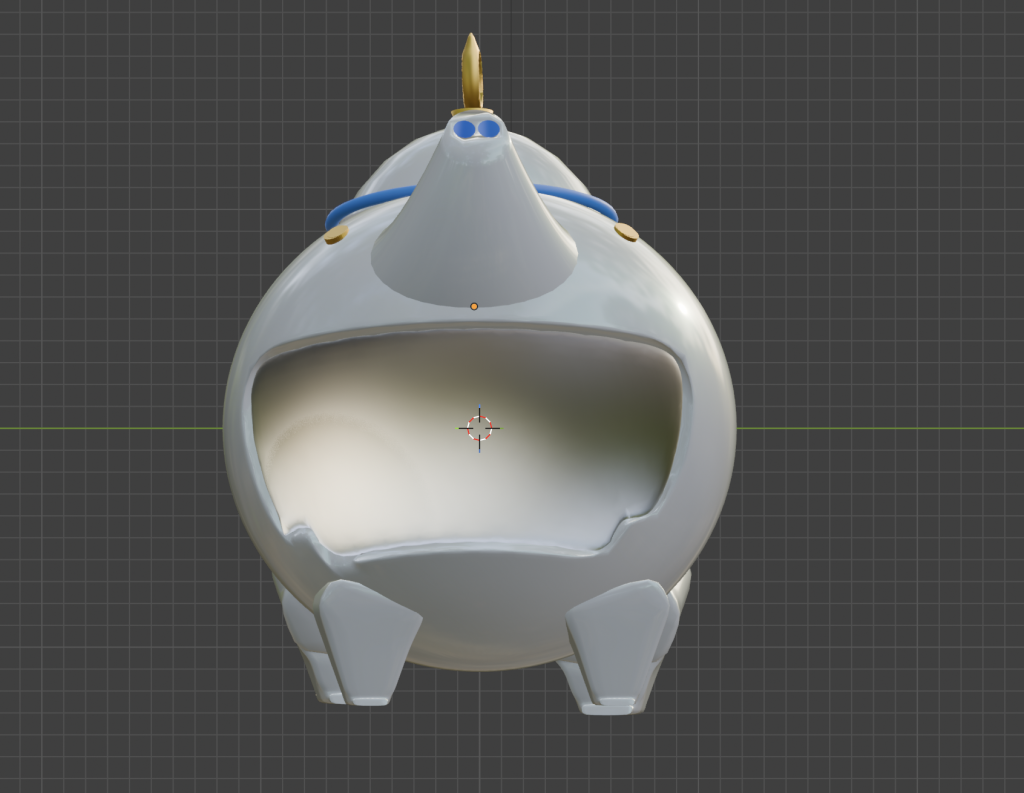
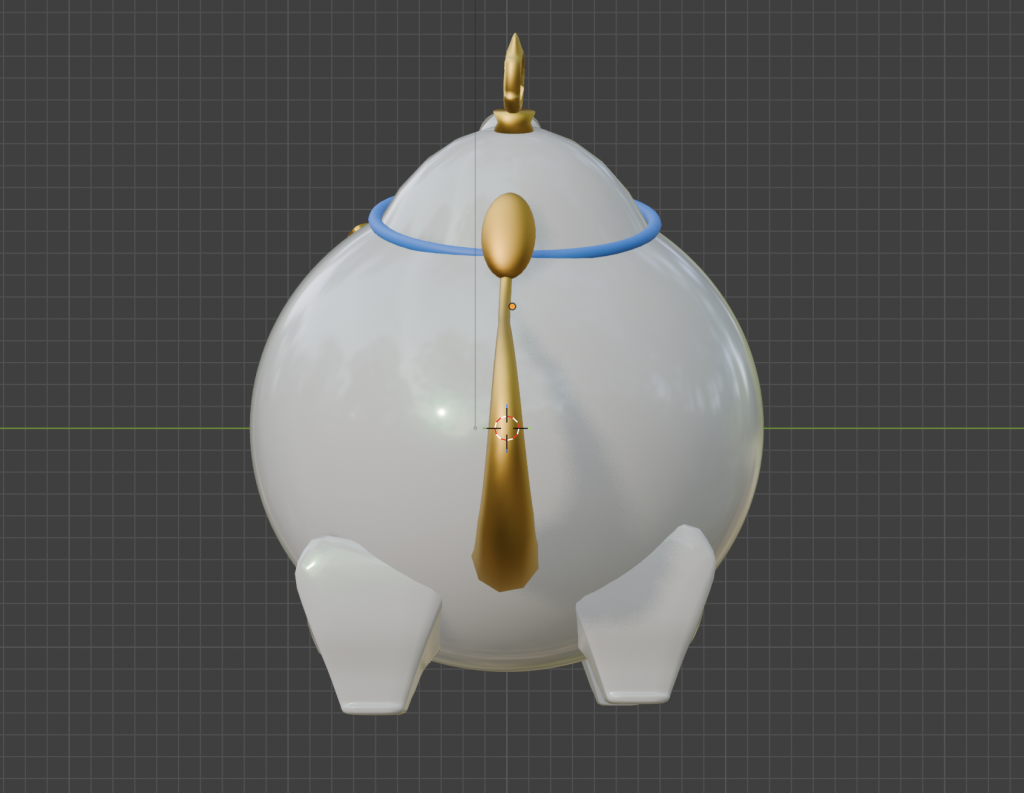
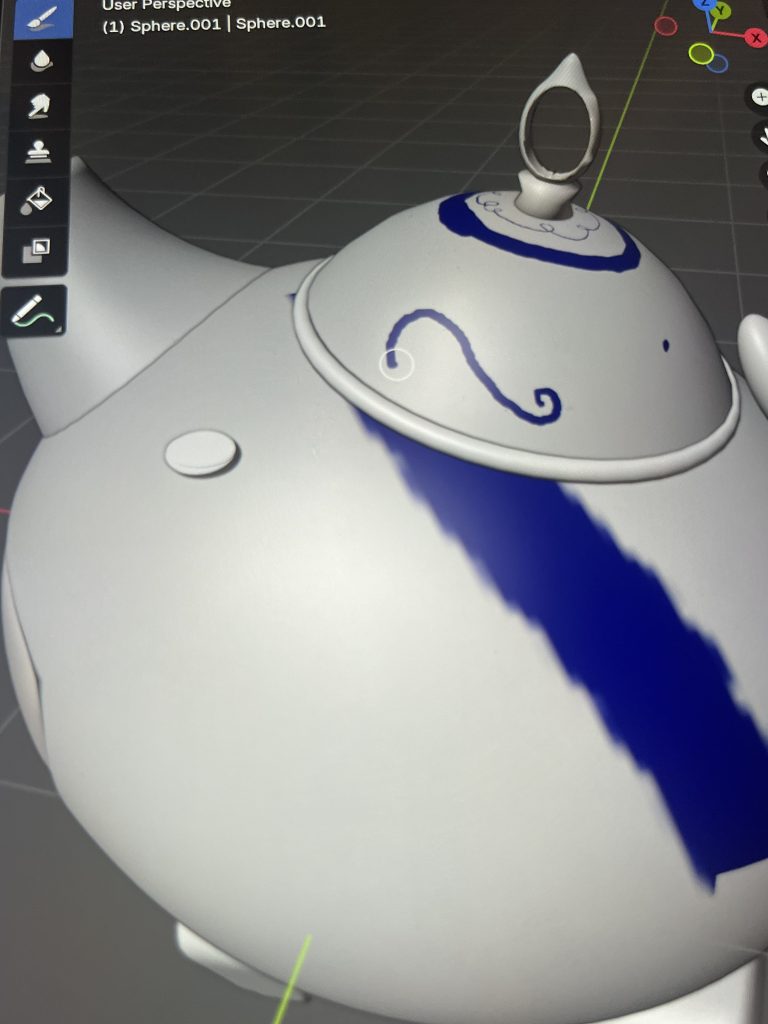
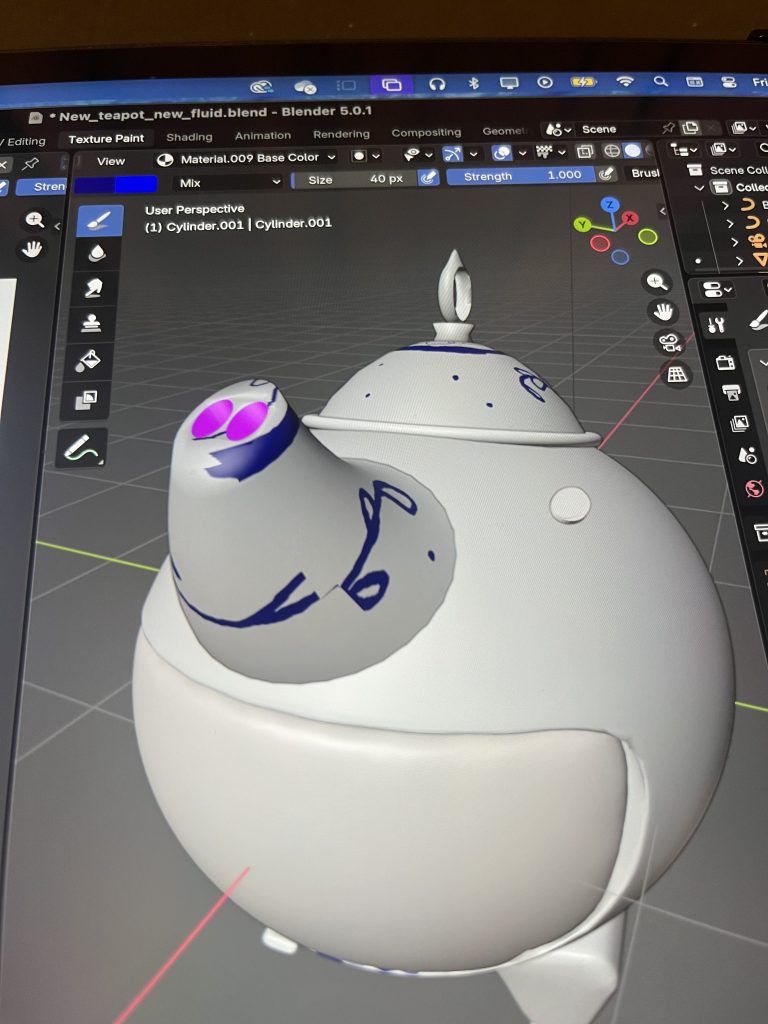
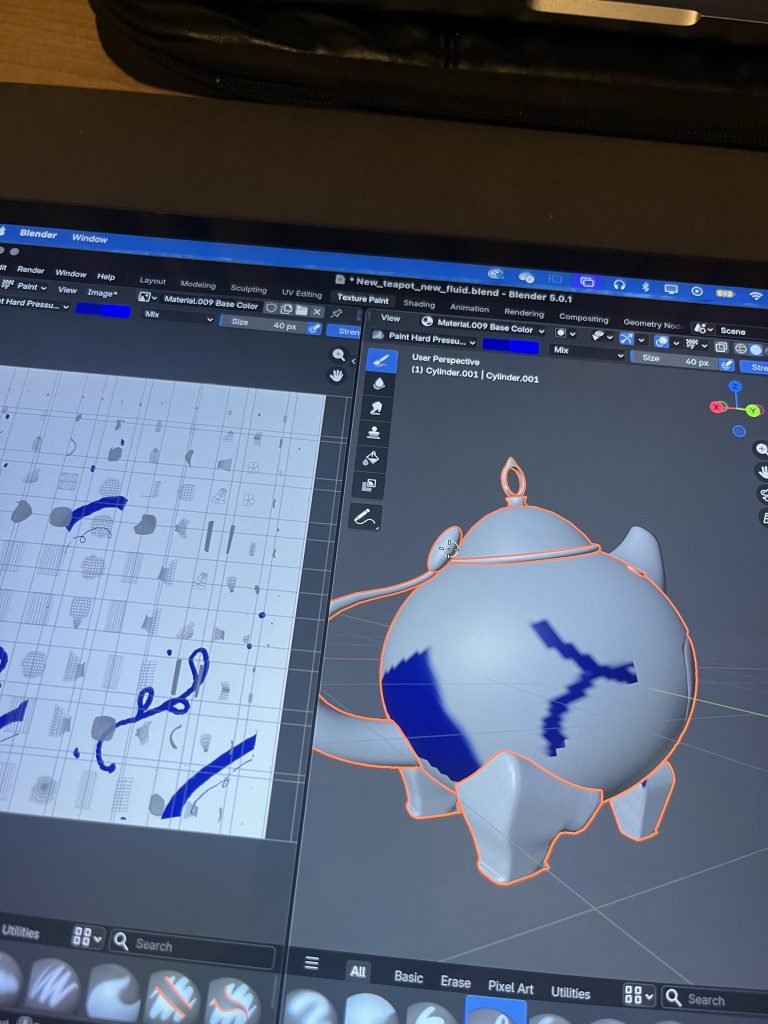
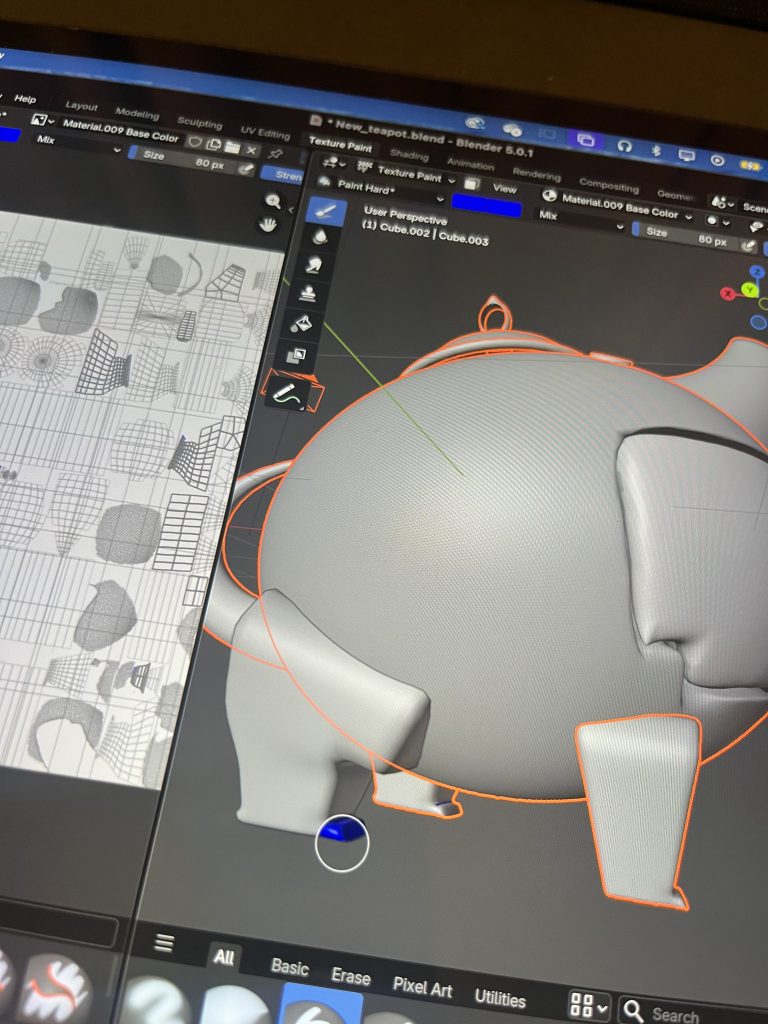
I give the painting another try but the shapes form my object were to complicated. So it was erroring with the design and painting allover the object in random orders. It made question my control of the software and who was actually in control me or blender
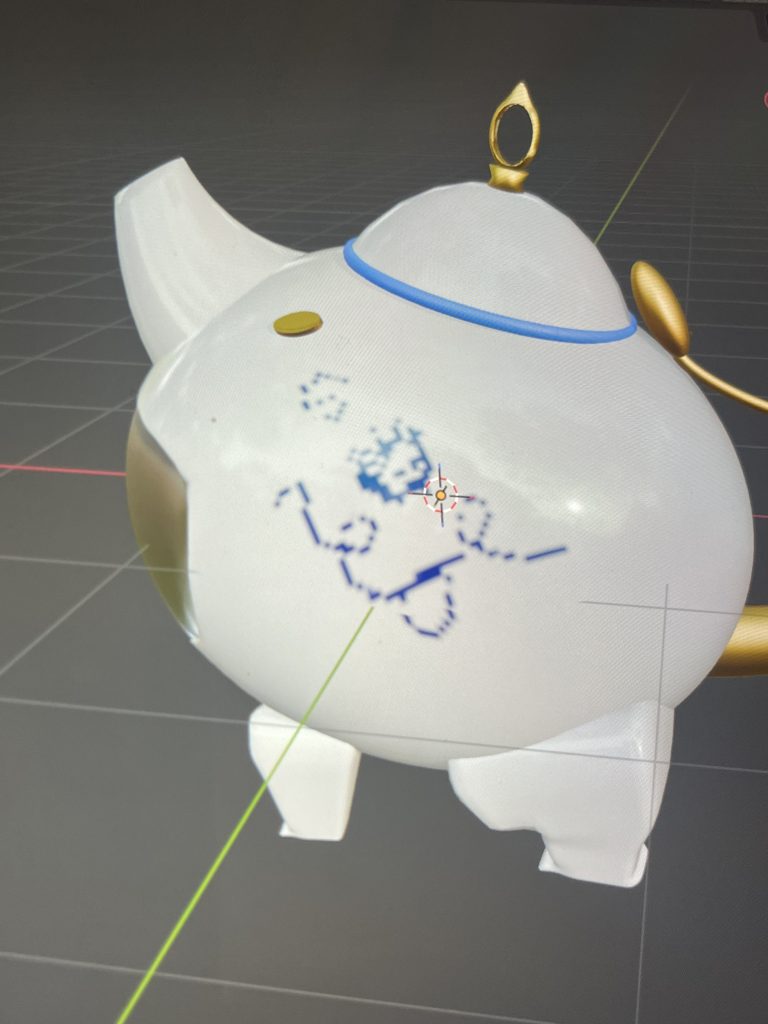
I wanted to find a way to show my proces. I came up with a split design webpage where you could scroll side by side between the two tools and their outcomes.
Website design
I wanted to create a space where you could see my proces of world building in Blender and generative AI. So I made a website with a split design. So you could see both at the same time. The idea was to show the different uses next to each other, so you can see the limitations and the opportunities of both tools.
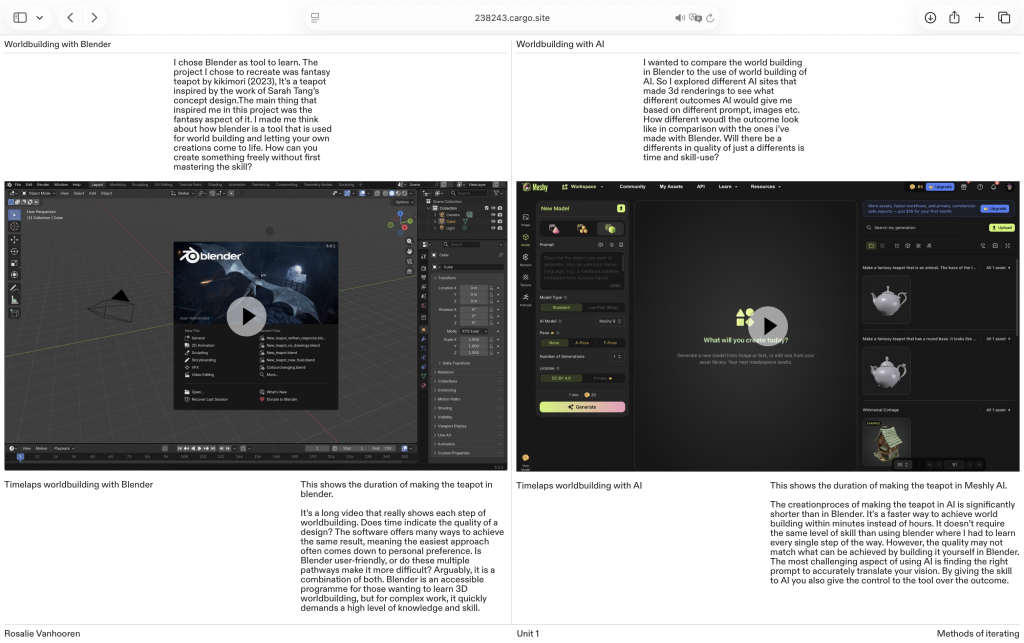
See video that show the whole webpage
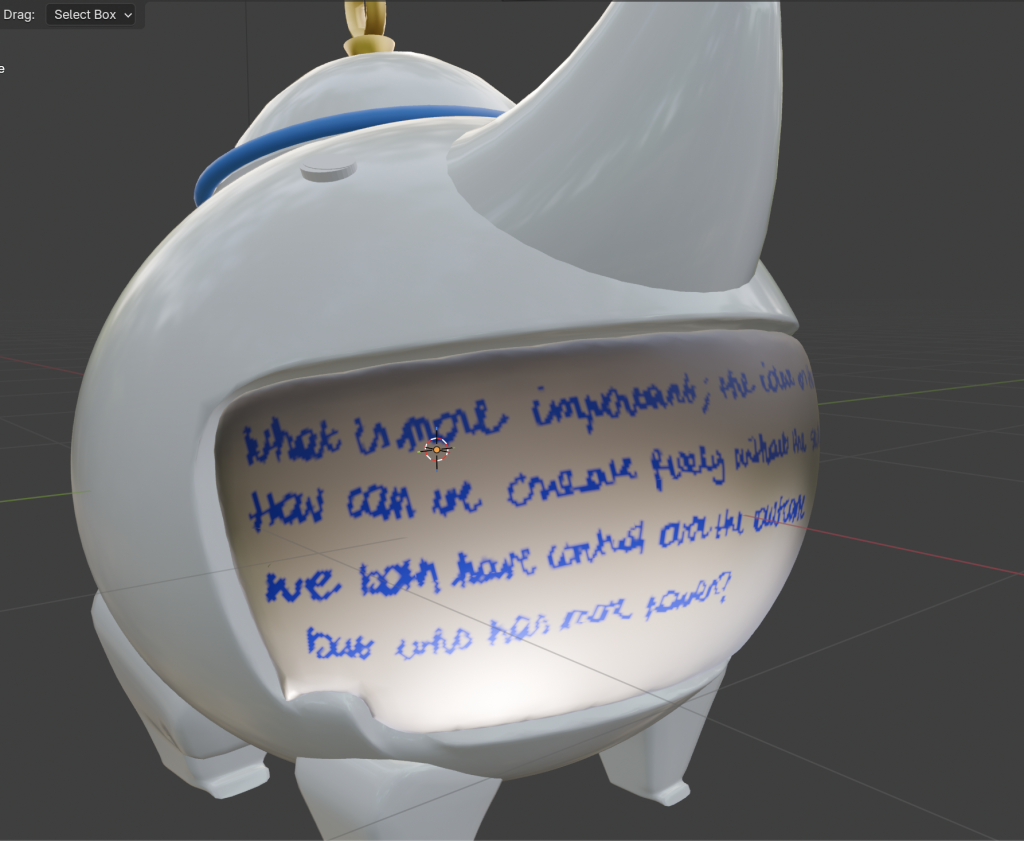
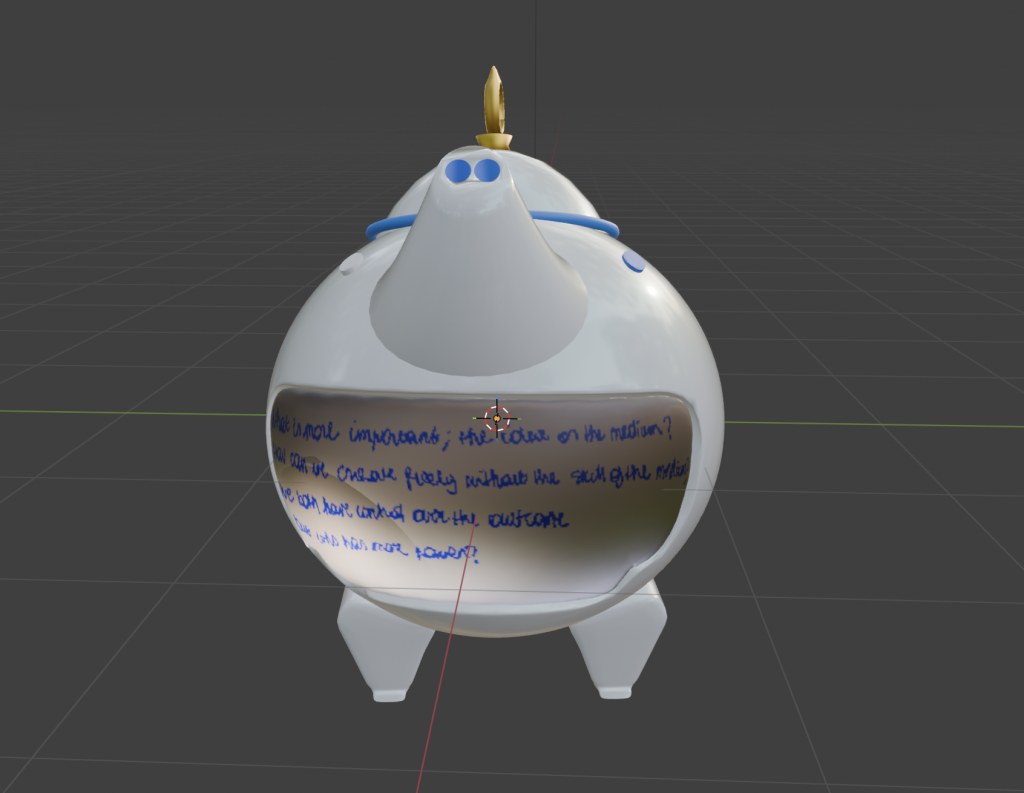
Rendering Written response:
I chose to write the main idea of my research on my teapot in the software. This way, the handwriting on it reflects the dialogue and duality between the analogue and the digital. The analogue represents the idea, and the digital represents the medium. The text poses the central questions of my research: ‘What is more important: the idea or the medium? How can we create freely without the skill of the medium? We both have control over the outcome, but who has more power?’
Draft 3: Written response
The tool I’ve chosen to learn and explore is Blender. It is a free, open-source 3D computer graphics software used for modelling, rigging, animation, rendering, simulation, motion tracking, and more. One of its key uses is 3D modelling and sculpting, where you can build complex objects and characters from basic shapes. For my enquiry, I focus on these tools as they represent the first steps to worldbuilding, before adding texture and other details. But what happens if you don’t have the skills to use Blender. Can worldbuilding really be achieved without them? And how accessible is learning a new skill?
To start my enquiry, I chose to copy Fantasy Teapot (2023) by the artist Kikimori. This is a 3D model of a teapot inspired by Sandara Tang’s concept art, made entirely in Blender. I first attempted to make the teapot without watching any tutorials, to see how I could navigate the tool and gauge how accessible it really is without prior knowledge. Adding basic shapes and working with the first tools I found was straightforward. However, when it came to creating more complex shapes or achieving greater accuracy, it became more challenging, and I began watching tutorials to help me navigate the different panels and viewports of the software. It became clear that Blender is harder to use when the shapes you want to create cannot be derived from the basic toolbox. There is a pen tool available in edit mode, but making it work in 3D and aligning it accurately across different perspectives proved difficult. By repeating the process several times, I found I was able to create shapes based on the teapot with increasing accuracy. However, I kept encountering the same obstacles and was unable to find solutions to overcome them. The software offers many ways to achieve the same result, meaning the easiest approach often comes down to personal preference. Is Blender user-friendly, or do these multiple pathways make it more difficult? Arguably, it is a combination of both. Blender is an accessible programme for those wanting to learn 3D worldbuilding, but for complex work, it quickly demands a high level of knowledge and skill.
How does this compare to using AI for worldbuilding? Both tools can be used for worldbuilding, but each requires a different skill set. AI can be an easier and faster approach, as it doesn’t require building an object from scratch in an unfamiliar software. However, the quality may not match what can be achieved by building it yourself in Blender. There are free sites that offer easy access to AI worldbuilding, though most are limited in how many creations you can make. The most challenging aspect of using AI is finding the right prompt to accurately translate your vision.
I also wanted to compare both AI and Blender to a subscription-based software. Adobe Illustrator has a 3D and materials feature that allows users to create 3D shapes in various materials. Although it is primarily a 2D software, it was interesting to explore how accessible and accurate it could be for worldbuilding. The pen tool makes it easier to create more complex shapes in 3D, but each object can only consist of a single shape. Combining multiple shapes becomes challenging because each object carries its own lighting, making it difficult to render them together cohesively. The standout feature is access to an online material library, which can be synchronised directly with Illustrator. Overall, this made me question the value of subscription software, as a free programme like Blender proved far more powerful. Illustrator is straightforward for basic 3D shapes, but lacks a 360-degree viewport, and the objects, while appearing 3D, retain a 2D quality that feels unconvincing.
Each piece of software had its limitations, which makes me wonder whether a perfect tool exists. One where you can create freely and easily, and where the outcome is aligned with your vision rather than constrained by your skill. Is the ability to create always tied to technical skill? Is the concept more important than the outcome? Does skill make the designer, or does the concept behind the work?
In Ghost in the Machine: Distributing Subjectivity, Andrew Blauvelt responds to the Conditional Design manifesto, whose central premise is that the process is the product. He introduces conditional design as a term that focuses on approach rather than chosen media, using the quote “We conduct our activities using methods of philosophers, engineers, inventors and mystics” to connect its ideas to the manifesto of Sol LeWitt. LeWitt remarked that if the machine makes the art, who makes the idea, suggesting that conceiving and articulating an idea is more important than its technical execution or medium. Conditional Design shares this vision. This is directly relevant to my research, in which I debate whether the medium or the idea holds more importance in worldbuilding, and how we can create freely without the skill to do so. Blauvelt also discusses relinquishing control in design. This is particularly interesting in the context of AI, when using it, we don’t have ultimate control over the outcome. We can input and adjust a prompt, but ultimately it is the AI that determines what is generated. Blender is different in that we have direct control over the tools available to us. However, if we want to create something that falls outside those tools, we are limited as designers in truly realising our vision.
Leave a Reply